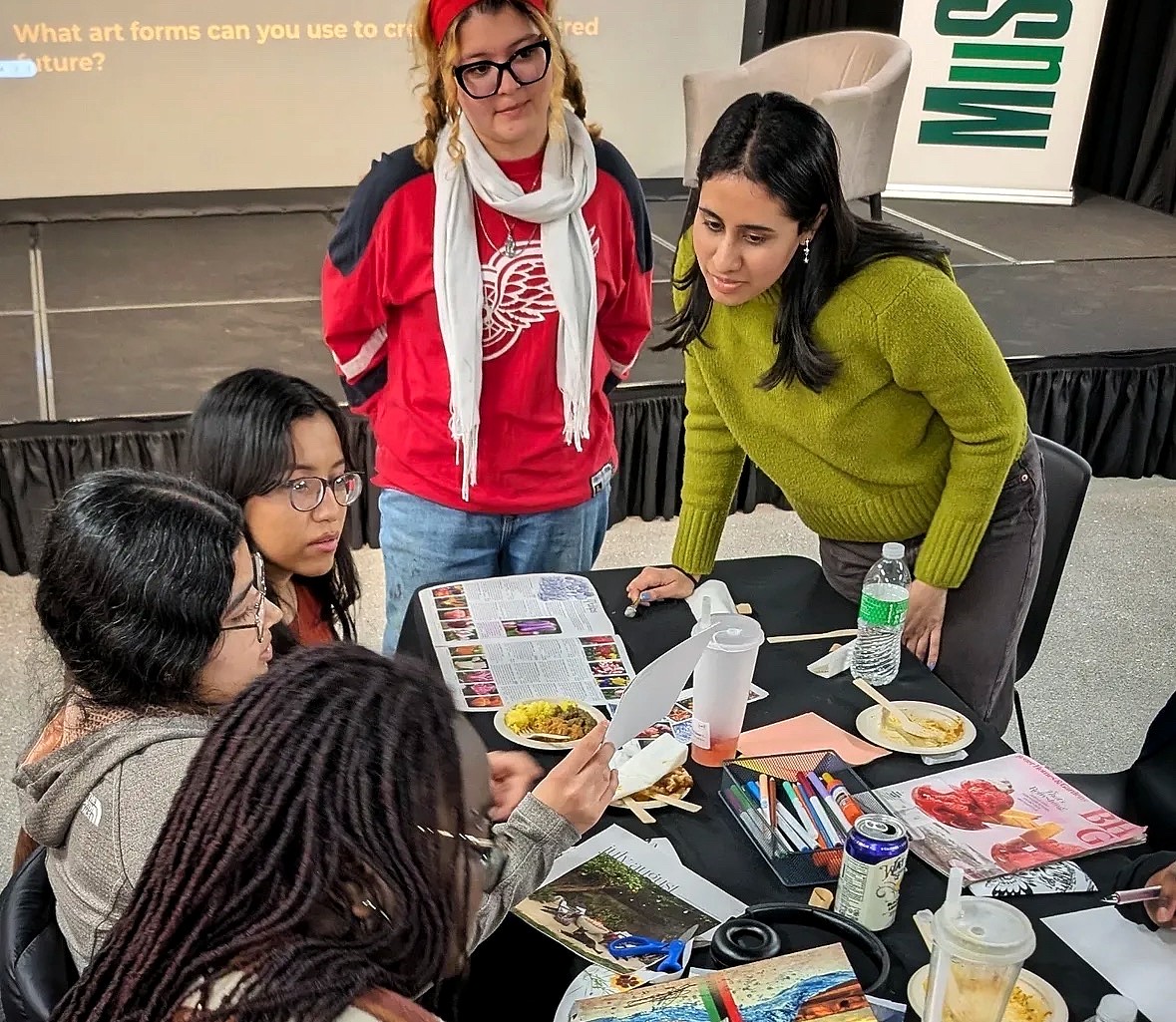
Aditi Gonuguntala is a fourth-year undergraduate student at Michigan State University majoring in Experience Architecture with a minor in Graphic Design. She also is a Communications Intern in the Office for Inclusive Excellence and Impact and University Communications and Marketing.
In this Student View, which originally was published by MSU Today, Gonuguntala writes about the Speculative Futures: Afrofuturism and the Art of Stacey Robinson event hosted by the MSU Museum.
The MSU Museum launched its year-long Speculative Futures program series on Feb. 11 with an event centered on artist and graphic novelist Stacey Robinson, which was moderated by Julian Chambliss, Professor in the Department of English and the Val Berryman Curator of History at the MSU Museum.
The room brought together a genuinely mixed crowd of students, alumni, faculty, Lansing Community College students, and community members. The event was scheduled to wrap at 7:30 p.m.; however, people stayed well past that, talking and making things. That detail stuck with me.
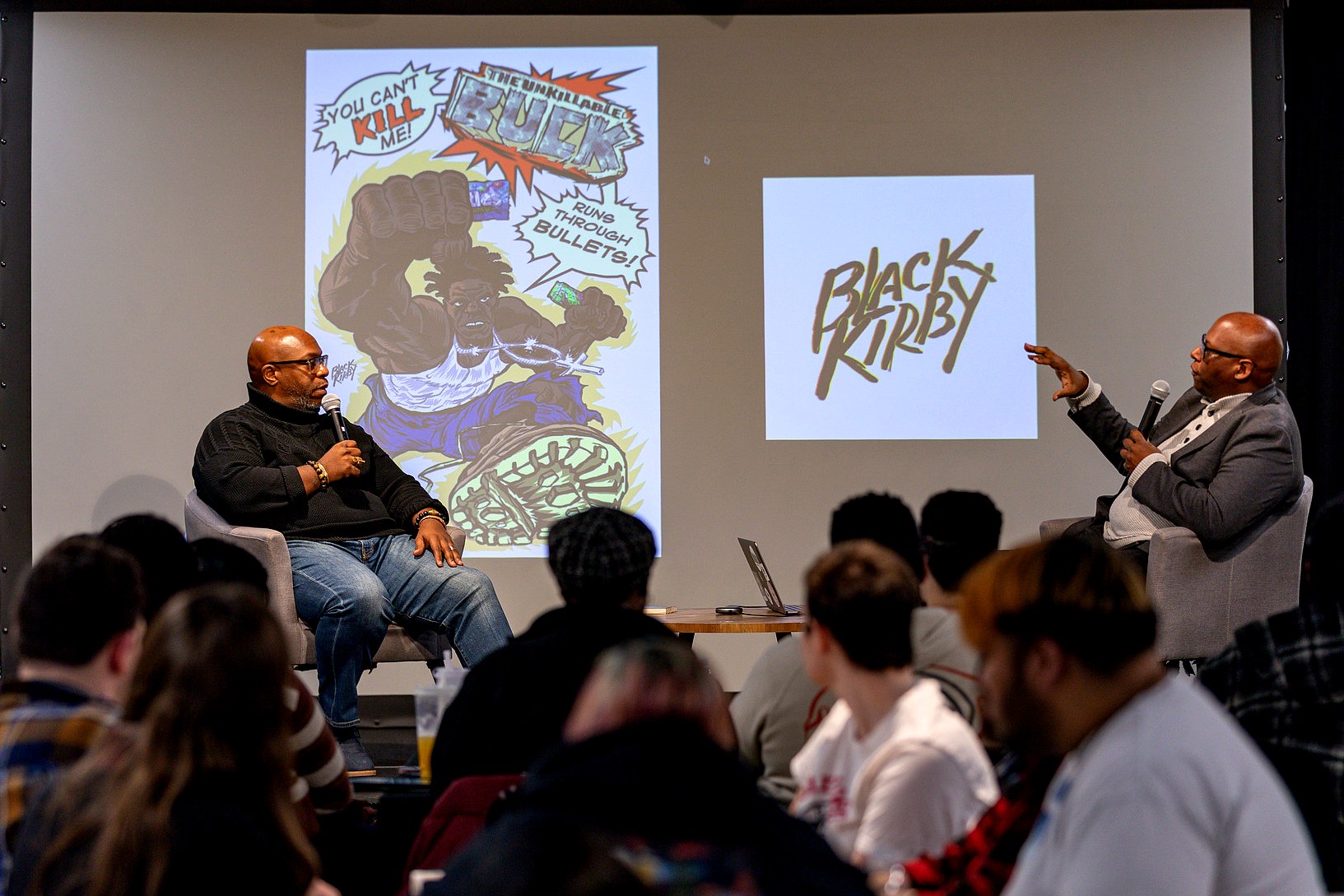
Black History Month on campus tends to center on remembrance, and rightly so. But this event offered something a little different. Rather than looking back and staying there, Robinson’s work asks what comes next and, more importantly, who gets to decide that.
Robinson describes himself as a storyteller. He works across digital collage, graphic novels, animation, and DJing. All of it points toward the same purpose: imagining Black futures where things turn out better. He spoke about growing up without a single Black superhero to look up to, about how the comics he loved as a kid consistently cast Black characters as the villains or the defeated. His work is, in part, a long and deliberate response to that.
For me, what I kept coming back to was a thought that felt simple but took time to fully settle: Look back to move forward. Not getting trapped in the past and not being naively optimistic either, but doing something harder — learning from history and using it as material to build something new. Doctoral student Jessica Reed, studying Curriculum, Instruction, and Teacher Education in MSU’s College of Education, synthesized it well when, inspired by Robinson, she said, “Oppressors can’t colonize your imagination.” That became the anchor idea of the night for me.
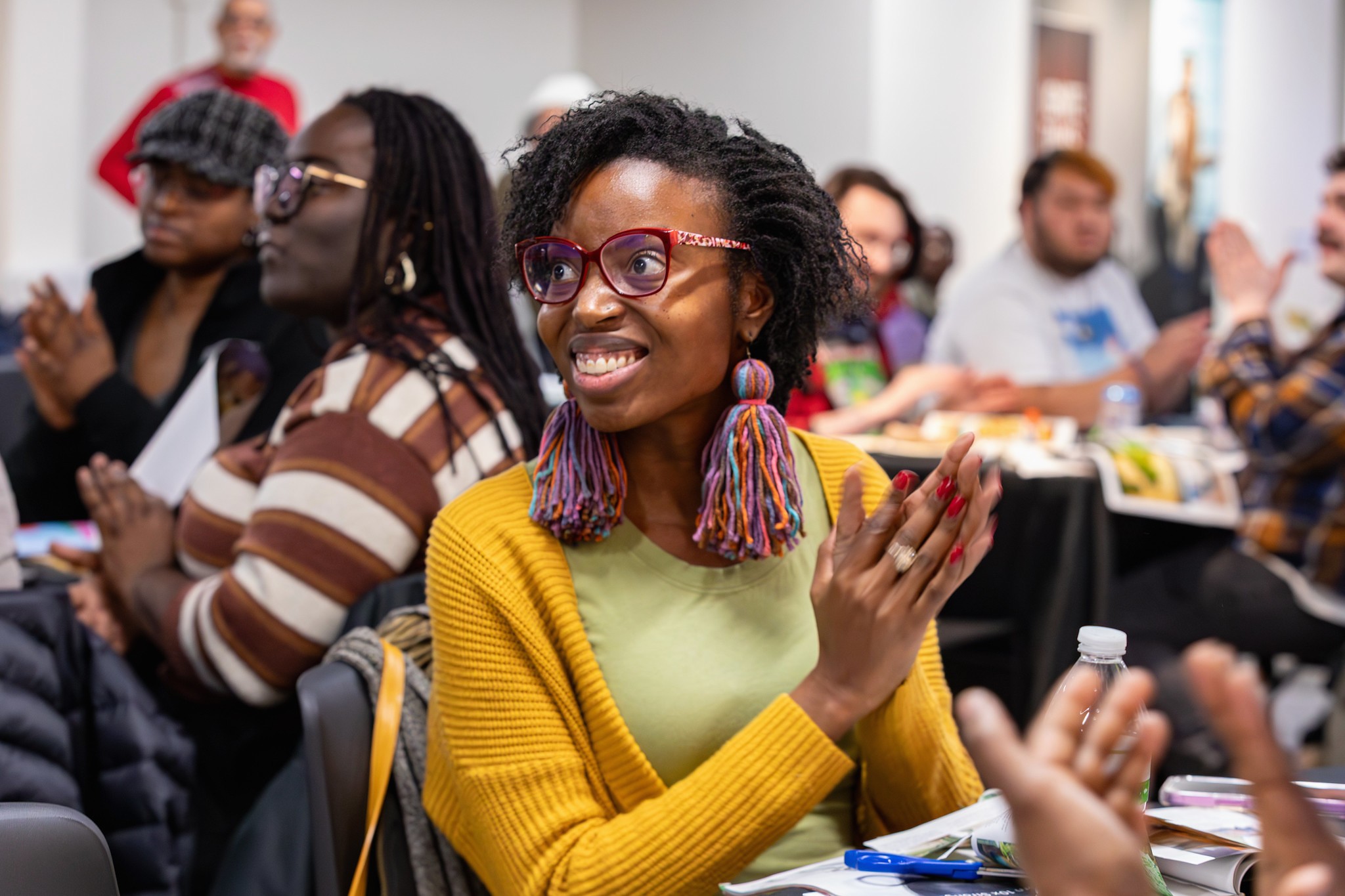
Art, at its best, is one of the rarest things that makes us stop and actually feel something, that lets you understand another’s intentions and inner world through what they made. Robinson clearly understands that, and he has turned it into a kind of constructive optimism, one that does not ignore what the past was but refuses to let it be the final word.
As an Indian international student with my own ancestral history of colonization, the evening resonated in ways I did not entirely expect. Growing up, the history I was taught focused almost entirely on oppression, rarely on what came before it or how far people have come in spite of it. Seeing Robinson use imagination and art to carve out a better future for African American people, one that the past never guaranteed, made me feel something close to pride in my own history, too. That kind of reimagining instills real hope — the kind that feels earned rather than assumed.
Black History Month is about honoring what was. This event reminded me that it can also be about imagining what still could be.


